
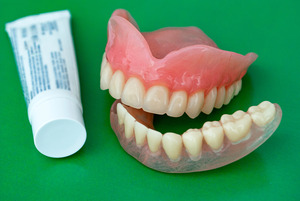
Properly fitted dentures generally stay securely in place on your gums thanks to natural suction. But what if your prosthesis isn’t as stable as you would like? In cases like this, you may want to consider using denture adhesive. However, it’s important to make sure that you know what you’re doing before pursuing this solution. Here’s what every denture-wearer should know about denture adhesives and the proper way to use them.
What is a Denture Adhesive?
A denture adhesive is a substance that can be used to help your dentures stay attached to your gums. There are various types of adhesives, including creams, powders, pastes, and strips. Many adhesives turn sticky when exposed to saliva, which is how they form a temporary bond between your prosthesis and the gum tissue.
When Should You Use Denture Adhesive?
If your dentures fit correctly, they likely won’t need any extra help staying in place. That said, you may benefit from using denture adhesive in the following circumstances:
- You are currently experiencing a dry mouth. This can cause dentures to feel loose because there’s not enough saliva for natural suction.
- You are a musician or public speaker, and you want to take extra steps to ensure that your dentures do not slip out of place while you’re performing or giving a speech.
- The shape of your gums has changed due to bone loss in your jaw, meaning your dentures no longer fit as well as they used to. An adhesive can give your dentures extra stability until you can have them relined or replaced.
How Should You Use Denture Adhesives?
Before using any type of denture adhesive, you should make sure that your prosthesis is completely clean and dry. Your chosen type of adhesive should come with instructions regarding how it should be applied. Follow these directions very carefully, and make sure that you avoid using more adhesive than necessary. Once the substance has been successfully applied, carefully place the dentures on your gums and hold them down for a few seconds.
When you’re finished wearing your dentures, you should clean your mouth thoroughly to get rid of leftover adhesive residue. You can do so by rinsing your mouth with warm water before brushing your gums with a soft toothbrush. It’s also important to clean the denture itself, so make sure to brush it thoroughly until the adhesive is gone.
When used correctly, denture adhesive can improve the stability of your prosthesis and help it fit more comfortably. That said, if your dentures are genuinely ill-fitting, you should see your dentist as soon as possible so that they can properly address the issue.
About the Author
Dr. Paul Samia is a graduate of the Touro College of Dental Medicine at New York Medical College. He is a proud member of the Academy of General Dentistry as well as other organizations. At Samia Family Dentistry of Garner, he offers fully customized care to patients of all ages. He is happy to offer dentures as a solution for patients who are missing most or all of their teeth. If you are thinking of getting dentures to reclaim a complete smile, you can schedule an appointment with Dr. Samia by visiting his website, using his online booking tool, or calling (919) 779-2818.